
Legislative Update: SB 364 placed on agenda in Senate Rules
January 23, 2026
In this update …
- FICPA President & CEO Shelly Weir joins the Governmental Affairs Team for a week of productive meetings at the Capitol.
- FICPA’s priority legislation, Senate Bill 364 by Sen. Gruters, is placed on agenda in Senate Rules.
- Major proposals move forward in the property tax and CIRA spaces.
- And we refresh our weekly FICPA Bill Tracker, monitoring legislation of interest to the profession.
By FICPA Governmental Affairs
Legislature Returns for Busy Week 2
On Tuesday, the Legislature returned from an extended weekend for Week 2 of the 2026 Legislative Session. This is always when the work of the legislative committees heats up. With more 1,700 filed bills all seeking a committee hearing, the pressure is on to get bills on agenda and moving forward.
This week marked the continuation of bill presentations in committees, as well as a Senate floor session where several measures were voted on and advanced to the House of Representatives. While no major legislation directly impacting the CPA profession moved in either chamber, the FICPA remained actively engaged throughout the week – meeting with legislators, hosting members at the Capitol and continuing to execute our comprehensive legislative strategy for 2026.
Week 2 traditionally signals the point in Session when momentum begins to build. As each day progresses, the picture of what issues and legislation will be prioritized by the Legislature becomes clearer. In the weeks ahead, we expect a significant uptick in bill movement and amendments.
FICPA Representatives Meet With Legislators
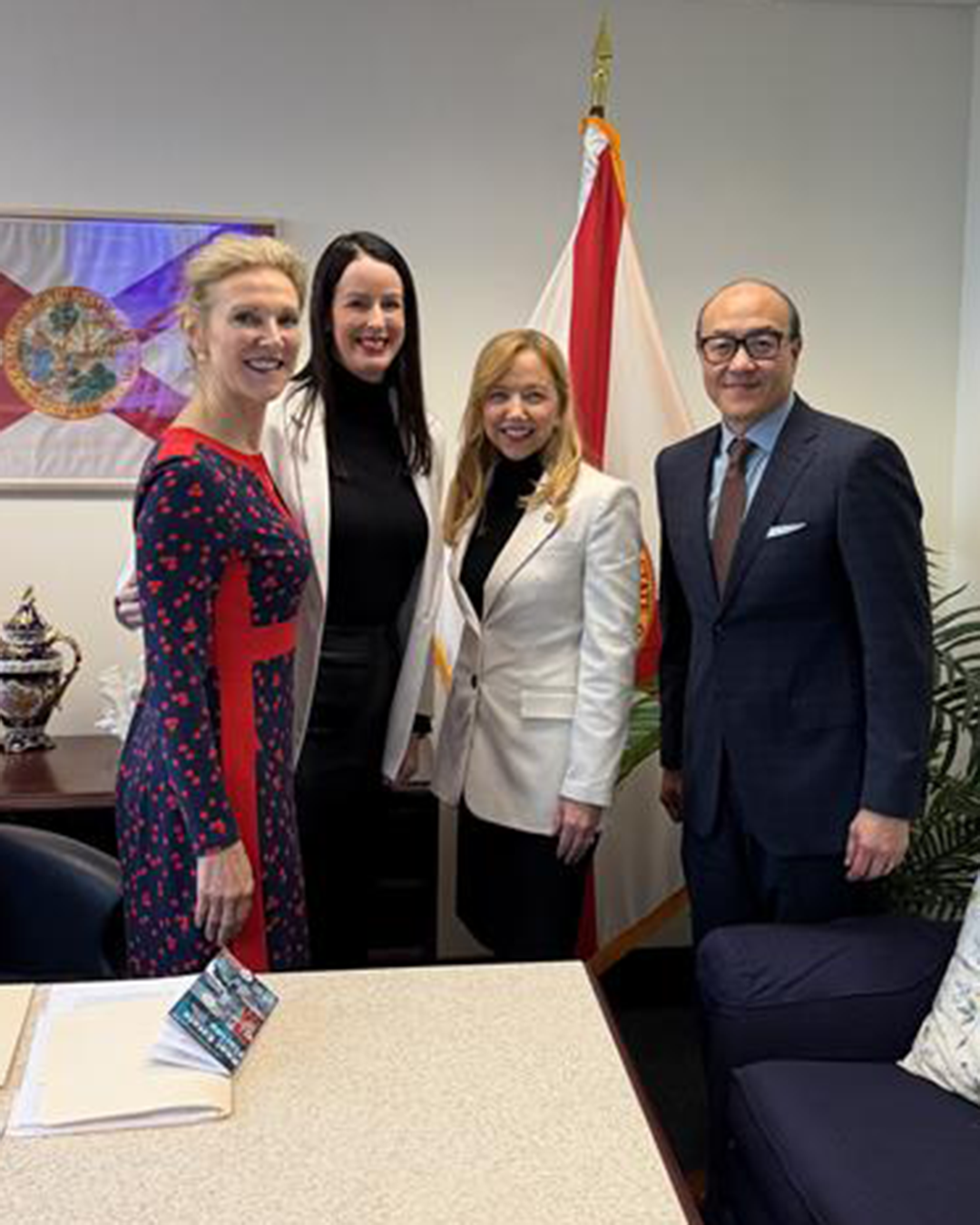
This week, the FICPA Governmental Affairs team was joined by President & CEO Shelly Weir for a strong week of advocacy on behalf of the profession. Together, the FICPA hosted several meetings with legislators, including Speaker-designate Sam Garrison, to discuss key issues impacting CPAs during the 2026 Legislative Session.
The FICPA was also joined for a day by Harold Kim and Kymberly Messersmith from member-firm KPMG (shown left with Rep. Rachel Plakon). It is always great to be joined by our partners to help show the strength and unity of the profession around our legislative priorities.
FICPA Priorities Update
As you are aware, the FICPA has advanced its priority legislation, House Bill 333 – Public Accountancy by Rep. Blanco and Senate Bill 364 – Public Accountancy by Sen. Gruters. These proposals are CPA licensure-efficiency bills that streamline and modernize processes and open up new pathways to licensure without lowering standards.
During the week, the FICPA met with numerous lawmakers and shared its strong support for HB 333 and SB 364.
Thanks to this week's engagement, the FICPA is happy to share that SB 364 has been placed on agenda in the Senate Rules Committee, its second and last committee stop before it is eligible to be heard on the Senate floor. The bill will be heard next Tuesday, Jan. 27, at 9 a.m.
The FICPA also continues to work hard to protect the profession. In previous updates, we have discussed this year’s deregulation bill, House Bill 607 – Industries and Professional Activities by Rep. Yarkosky, that would eliminate the Board of Accountancy. While there was no formal action this week, the FICPA continues to strongly oppose the elimination of the Board of Accountancy. We expect HB 607 to advance in the House in the upcoming weeks.
The FICPA understands how deeply members care about these issues and the potential impact they may have on your license and your profession. Please be assured that the FICPA is closely monitoring all developments and remains in ongoing conversations with legislative leadership and policymakers. As these bills progress, we will keep you informed every step of the way. For now, we encourage members to stay aware and engaged, while awaiting further guidance on when and how you can assist. The FICPA has your back and will continue to advocate tirelessly on your behalf in Tallahassee.
Major Proposals Moving Forward
The FICPA tracks hundreds of bills and amendments each Legislative Session. While many measures are filed, only a select number rise to the level of heightened review by the Governmental Affairs Team and warrant special attention for members. This week, three major proposals moved forward that are expected to dominate legislative conversations in the weeks ahead: House Joint Resolution (HJR) 203, House Joint Resolution (HJR) 213 and House Bill 657.
Property Tax Proposals
The FICPA has previously reported on the Legislature’s growing interest in providing property tax reform. While several proposals have been filed this Session, the traction gained by these two measures at this stage indicates a strong and sustained focus by House leadership on property tax reform.
House Joint Resolution 203 – Phased Out Elimination of Non-school Property Tax for Homesteads by Rep. Miller passed its final committee of reference and is now eligible for consideration on the House floor. House Joint Resolution 213 – Modification of Limitations on Property Assessment Increases by Rep. Griffitts Jr advanced through its second committee of reference and could be heard in its final committee as early as next week. At this time, neither proposal has a Senate companion; however, discussions are expected to continue as these measures advance and potentially cross over to the other chamber.
As a reminder, joint resolutions passed by the Legislature do not require the governor’s signature. Constitutional amendments placed on the 2026 General Election ballot must receive 60% voter approval to be adopted. While there remains a long road ahead for these proposals, the amount of time and attention dedicated to property tax issues thus far suggests these conversations will remain front and center throughout Session.
Community Association (CIRA) Legislation
In the CIRA space,House Bill 657 – Community Association by Rep. Porras was heard in its first committee of reference this week. The bill proposes significant changes to the governance and legal framework of community associations, including expanded state oversight and increased exposure to civil claims
During the committee hearing, numerous speakers and legislators weighed in on the proposal, highlighting concerns related to accountability, enforcement and consumer protection. HB 657 was referred to four committees and does not have a Senate companion. Conversations on the bill will continue, but the proposal still has a long path ahead. The FICPA will closely monitor its progress and assess potential impacts on CPAs practicing in the CIRA space.
The FICPA has additional information on these bills and more in our 2026 Legislative Bill Tracker.
FICPA's 2026 Bill Tracker
This section provides a broad overview of the key issues the FICPA Governmental Affairs team is monitoring during the 2026 Legislative Session. While the FICPA tracks more than 2,000 bills each year, the bill tracker focuses on a select group of proposals that could significantly impact the CPA profession, are actively moving through the Legislature and are receiving direct engagement from the FICPA. If you have questions about a bill not included in this report, please contact Jason Harrell at jasonh@ficpa.org.
DBPR/Licensure
House Bill 333 – Public Accountancy by Rep. Blanco / Senate Bill 364 - Public Accountancy by Sen. Gruters. FICPA’s priority legislation proactively proposes efficiencies and opens new pathways to licensure. The bill strengthens and enhances Florida’s practice privileges, streamlines licensure by endorsement and increases efficiency in the licensing process. The bill also proposes alternative pathways to licensure, providing more options and flexibility while maintaining the required accounting and business knowledge:
- Current Path: 150 semester hours, one year of experience and passage of the CPA exam.
- New Pathway 1: Master’s degree in accounting/finance, one year of experience and passage of the CPA exam.
- New Pathway 2: Bachelor’s degree in accounting/finance, two years of experience, and passage of the CPA exam.
- New Pathway 3: Bachelor’s degree in any field, with coursework in accounting/finance, two years of experience and passage of the CPA exam.
*Note that all pathways require accounting and business concentrations, as prescribed by the Florida Board of Accountancy, from an accredited college or university.
The FICPA’s efficiency bill will make Florida a national leader by providing an effective licensure process that strengthens and promotes the state’s economy and workforce.
- HB 333 has been referred to the Industries and Professional Activities Subcommittee in the Florida House of Representatives.
- SB 364 passed unanimously in the Regulated Industries Committee in the Florida Senate. It is now on agenda in the Senate Rules Committee.
House Bill 607 – Industries & Professional Activities by Rep. Yarkosky. The bill consolidates apprenticeship, licensure and continuing education requirements by reorganizing numerous professional boards under DBPR. As for the CPA profession, the bill completely eliminates the Board of Accountancy.
- HB 607 passed the State Administration Budget Subcommittee in the House of Representatives. It will now be sent to its third and final stop, the House Commerce Committee.
Senate Bill 1666 – Department of Business and Professional Regulation by Sen. Burgess. This bill makes changes to licensing, oversight, and other references for numerous boards and professions with DBPR. Important to the CPA profession, the bill renames the Clay Ford Scholarship and expends scholarship eligibility.
- SB 1666 has been referred to the Regulated Industries Committee in the Florida Senate.
House Bill 1189 – Diversity, Equity, and Inclusion and Affirmative Action by Rep. Sapp. This bill removes statutory references to affirmative action and minority-based preferences across multiple Florida laws. The bill also retitles the Clay Ford Scholarship and adjusts criteria for scholarship applicants and council appointments.
- HB 1189 has been referred to the Governmental Operations Subcommittee in the Florida House of Representatives.
House Select Committee on Property Tax Proposals
As the FICPA has reported, the Florida Legislature is looking at the potential elimination of property taxes. The following bills were introduced in the House Select Committee on Property Taxes and have been heard at least once in committee. If passed by both chambers of the Florida Legislature, a proposal would be placed on the 2026 general election ballot, where it would need 60% voter support to pass into law.
House Joint Resolution 201 – Elimination of Non-school Property Tax for Homesteads by Rep. Steele. The proposed constitutional amendment would exempt homestead property from all ad valorem taxes other than school district levies and prohibit local governments from reducing law enforcement funding below an established benchmark.
- HJR 201 passed the State Affairs Committee in the House of Representatives. It will now be sent to its third and final stop, the House Ways and Means Committee.
House Joint Resolution 203 – Phased Out Elimination of Non-school Property Tax for Homesteads by Rep. Miller. The proposed constitutional amendment would annually raise the homestead exemption for non-school ad valorem taxes by $100,000 for 10 years and make homestead property fully exempt from non-school ad valorem taxes beginning in 2037. The proposal prohibits counties and municipalities from reducing law enforcement budgets below the higher of their 2025-26 or 2026-27 funding levels.
- HJR 203 passed the Ways and Means Committee in the House of Representatives. It will now be heard on the House floor.
House Joint Resolution 209 – Property Insurance Relief Homestead Exemption of Non-school Property Tax by Rep. Busatta. The proposed constitutional amendment adds a new exemption tier for homestead properties carrying comprehensive multiperil insurance, increasing the exempt amount by $200,000 on non-school ad valorem taxes. The proposal prevents counties and municipalities from lowering total law enforcement funding below the higher of their 2025-26 or 2026-27 budgeted levels.
- HJR 209 passed the House Ways and Means Committee. It will now be heard on the House floor.
House Joint Resolution 213 – Modification of Limitations on Property Assessment Increases by Rep. Griffitts Jr. The proposed constitutional amendment changes the frequency of homestead property assessment increases from every year to once every three years for all levies other than school district levies. The proposal raises the maximum permissible non-homestead property assessment increase from 10% to 15%, applying once every three years rather than annually.
- HJR 213 passed the State Affairs Committee in the House of Representatives. It will now be sent to its third and final stop the House Ways & Means Committee.
Audit/Tax/Industry
House Bill 215 – Ad Valorem Taxation by Rep. Albert. The bill allows a married couple to combine each spouse’s prior homestead difference toward their new homestead, up to a combined $500,000 limit. The bill requires a two-thirds vote of the governing body to increase the prior year's adopted millage rate and authorizes the Department of Revenue to adopt emergency rules to implement these changes.
- HB 215 passed the Select Committee on Property Taxes in the House of Representatives. It will now be sent to its second stop, the House State Affairs Committee.
Senate Bill 678 – Deductions for Certain Losses of Alcoholic Beverages by Sen. Mayfield / House Bill 1137 – Excise Tax Deduction on Alcoholic Beverages by Reps. Robinson and Overdorf. The bill allows monthly excise tax deductions for vinous, spirituous, or malt beverage losses due to breakage, spoliation, evaporation, or expiration at specified percentage rates or actual gallonage in the case of malt beverages. It defines and excludes extraordinary losses from standard deductions, requiring immediate notice to the division and providing detailed steps to claim excise tax deductions for such losses.
- SB 678 passed the Regulated Industries Committee in the Florida Senate. It will now be sent to its second committee the Senate Finance and Tax Committee.
- HB 1137 passed the Ways and Means Committee in the Florida House of Representatives, it will now be sent to its second committee the House Industries and Professional Activities Subcommittee.
Senate Bill 7010 – Roth Contribution Plans in Deferred Compensation Programs by the Senate Committee on Governmental Oversight and Accountability. The bill allows deferred compensation plans offered by the state and local governments to provide a Roth contribution option and adds language permitting qualified Roth contributions in deferred compensation plans for eligible employees. The bill also repels the statutory provision previously restricting employee contributions to the state deferred compensation plan.
- SB 7010 passed off the Senate floor. It will now be sent in messages to the House to await presentation on the House floor.
Senate Bill 320 – Administrative Efficiency in Public Schools by Sen. Simon / House Bill 963 – Administrative Efficiency in Public Schools by Rep. Smith. The bill deletes the requirement for an internal auditor in large districts and removes the obligation to include the school financial report in the student handbook.
- SB 320 passed off the Senate floor. It will now be sent in messages to the House to await presentation on the House floor.
- HB 963 has been referred to the Education Administrative Subcommittee in the Florida House of Representatives.
House Bill 797 – Nonprofit Corporations by Rep. Tuck / Senate Bill 554 – Nonprofit Corporations by Sen. Bernard. This bill is a major rewrite of chapter 617, which substantially revises the law governing nonprofit corporations and updating corporate powers, procedures, and filings.
- HB 797 passed the Civil Justice and Claims Subcommittee in the Florida House of Representatives. It now moves to its third and final stop the House Commerce Committee.
- SB 554 passed the Commerce and Tourism Committee in the Florida Senate. It now moves to its second committee stop the Senate Judiciary Committee.
Senate Bill 1296 – Public Employees Relations Commission by Sen. Martin / House Bill 995 - Public Employees Relations Commission by Rep. Persons-Mulicka. The bill repeals the requirement that organizations certified as bargaining agents provide its members with an annual financial report prepared by a CPA.
- SB 1296 has been referred to the Governmental Oversight and Accountability Committee in the Florida Senate.
- HB 995 has been referred to the Government Operations Subcommittee in the Florida House of Representatives.
State and Local Government
House Bill 103 – Local Business Taxes by Rep. Botana / Senate Bill 122 – Local Business Taxes by Sen. Truenow. The bills repeal Chapter 205, ending the statewide framework for local business taxes. The bills create s. 218.150 to permit municipalities already imposing a gross-receipts-based merchant tax to continue doing so, to revise the definition of “merchant” but not to adjust the existing tax rate. The bills remove requirements for businesses to present local business tax receipts or pay local business taxes across various industries and regulatory contexts.
- HB 103 passed the Intergovernmental Affairs Subcommittee in the House of Representatives. It will now be sent to its third and final stop, the House State Affairs Committee.
- SB 122 passed the Community Affairs Committee in the Senate. It will now be sent to its second stop, the Senate Finance and Tax Committee.
Senate Bill 250 – Rural Communities by Sen. Simon. The bill, a priority for the Senate President, establishes the Office of Rural Prosperity in the Department of Commerce to coordinate rural initiatives, administer grants and offer technical assistance. It creates the Renaissance Grants Program to provide block grants for counties with long-term population decline to stimulate growth and economic vitality.
- SB 250 passed the Senate Floor unanimously. It will now be sent in messages to the House to await presentation on the House floor.
House Bill 145 – Suits Against the Government by Rep. McFarland / Senate Bill 1366 – Claims Against the Government by Sen. Brodeur. The bill increases statutory liability limits for tort claims against governmental entities, streamlines claim procedures and adjusts statutes of limitation and insurance provisions while creating new exceptions for specific victims.
- HB 145 passed off the House floor It will now be sent in messages to the Senate to await presentation on the Senate floor.
- SB 1366 has been referred to the Judiciary Committee in the Florida Senate.
Senate Bill 482 – Artificial Intelligence Bill of Rights by Sen. Leek / House Bill 1395 – Artificial Intelligence by Rep. Rizo. The bill establishes an Artificial Intelligence Bill of Rights, restricting government contracts with foreign controlled AI entities. The bill also mandates that bot operators disclose to users they are interacting with nonhuman systems at the start of, and periodically during, any interaction.
- SB 482 passed the Commerce and Tourism Committee in the Florida Senate. It will now be sent to its second and final committee the Senate Appropriations Committee.
- HB 1395 has been referred to the Information Technology Budget and Policy Subcommittee in the Florida House of Representatives.
House Bill 1303 – Department of Financial Services by Rep. Miller / Senate Bill 1572 – Department of Financial Services by Sen. DiCeglie. This bill establishes the Florida Agency for Fiscal Oversight (FAFO) within the Department of Financial Services, granting authority to audit local governments that levy or increase taxes and to impose fines or withhold state funds for noncompliance. The bill mandates an annual Local Government Efficiency Report submitted to the Department of Financial Services, which may produce a Local Government Spending Analysis for public review.
- HB 1303 has been referenced to the Insurance and Banking Subcommittee in the Florida House of Representatives.
- SB 1572 has been referenced to the Banking and Insurance Committee in the Florida Senate.
House Bill 1329 – Local Government Spending by Reps. Benarroch and Miller / Senate Bill 1566 – Local Government Spending by Sen. DiCeglie. The bill increases local government budget transparency requirements and prohibit the use of public funds for diversity, equity, and inclusion initiatives. The bill extends the time periods for posting tentative and final budgets on county and municipal websites. The Bill mandates a budget cutting exercise identifying 10% in possible reductions before final budget adoption.
- HB 1329 has been referenced to the Intergovernmental Affairs Subcommittee in the Florida House of Representatives.
- SB 1566 has been referenced to the Community Affairs Committee in the Florida Senate.
Condos and HOAs
House Bill 255 – Condominium Associations by Rep. Snyder / Senate Bill 638 - Condominium Associations by Trumbull. The bills mandate condominium associations to maintain additional records, clarify limitations periods for certain claims and require the creation of a publicly accessible online database of turnover certificates. They add the association’s turnover certificate and annual report to the list of official records that must be maintained by condominium associations.
- HB 255 has been referenced to the Civil Justice & Claims Subcommittee in the Florida House of Representatives.
- SB 638 has been referenced to the Regulated Industries Committee in the Florida Senate.
House Bill 657 – Community Association by Rep. Porras. The bill removes statutory requirements for pre-suit mediation in condominium and homeowners’ association disputes and clarifies the use of arbitration instead. It requires associations to include or amend their governing documents with a statement referring to the Florida Condominium Act, subject to member approval.
- HB 657 passed the Housing, Agriculture and Tourism Subcommittee in the Florida House of Representatives. It will now be sent to its second committee stop the House Civil Justice and Claims Subcommittee.
House Bill 465 – Community Association Management by Rep. Nix / Senate Bill 822 Community Association Management by Sen. Gruters. The bills require associations with total annual revenues of $500,000 or more to contract with a community association management firm. The bills clarify that all applicable licenses under part VIII of chapter 468, F.S., must be held by the management firm. The bills impose a duty on each board member, officer or director to verify the licensure of the community association manager or firm before contracting.
- HB 465 passed the House Housing, Agriculture, and Tourism Subcommittee it now moves its second and final committee the Commerce Committee in the Florida House of Representatives.
- SB 822 has been referenced to the Regulated Industries Committee in the Senate.
Senate Bill 722 – Condominium Structural Integrity Reserve Studies by Sen. Osgood. The bill applies SIRS requirements to buildings six or more stories in height. The bill exempts buildings five or fewer stories in height from conducting a structural integrity reserve study and allows those associations, by majority vote, to waive or reduce reserve contributions.
- SB 722 has been referenced to the Regulated Industries Committee in the Florida Senate.
Senate Bill 1498 – Community Associations by Sen. Bradley. The bill expands turnover inspection requirements for developers, clarifies structural integrity reserve study obligations for buildings with three habitable stories or higher, and updates electronic voting procedures for associations. The bill specifies “three habitable stories or higher” when determining if a structural integrity reserve study is required, with new criteria for study updates and disclosure requirements.
- SB 1498 has been referenced to the Regulated Industries Committee in the Florida Senate.